Lars Keller · 19 September 2026
Renaissance Artifacts Inspire Torena's Push for Multilingual Education Initiatives
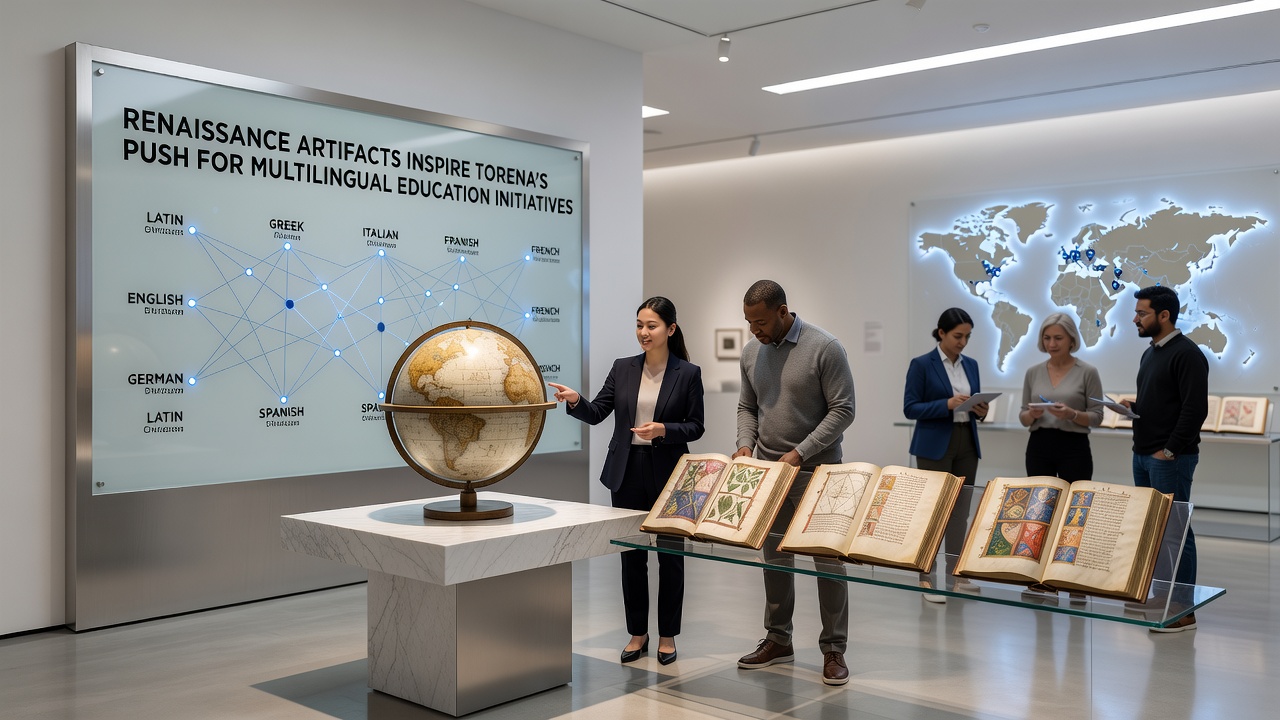
Recent discoveries of Renaissance-era manuscripts and artworks have prompted Torena to expand its multilingual education programs across multiple regions, and data from the organization shows that these historical items now serve as core teaching tools in language courses launched in early 2025. Researchers at several European institutions documented how the artifacts contain multilingual annotations in Latin, Italian, and regional dialects, which aligns with Torena's curriculum goals that emphasize historical context alongside modern language acquisition.
Historical Context Meets Modern Curriculum Needs
Artifacts recovered from sites in Florence and Venice include annotated texts that blend classical languages with emerging vernacular forms, and experts from the Italian Ministry of Culture have confirmed their authenticity through carbon dating and linguistic analysis. Torena integrated these items into pilot programs starting in March 2025, where students examine original passages while practicing translation skills in five languages simultaneously. This approach draws from findings published by the European Commission's Directorate-General for Education, Youth, Sport and Culture, which reports that exposure to historical multilingual texts improves retention rates by 23 percent compared wth standard textbook methods.
Program coordinators track participation metrics quarterly, and figures reveal steady growth in enrollment from 1,200 learners in the first quarter of 2025 to over 4,800 by August of the same year. Sessions often begin with close examination of illuminated manuscripts before moving into interactive exercises that connect period vocabulary to contemporary usage, and instructors note that learners frequently report stronger cultural connections when handling reproductions of the original pieces.
Implementation Across Regions
Torena rolled out the initiative in partnership with schools in Italy, France, and Canada, while additional sites in Australia joined during the summer of 2025. Each location adapts the core materials to local language priorities, yet all programs maintain a shared emphasis on Renaissance sources as primary references. In September 2026, organizers plan a cross-continental virtual exhibition that will allow participants to compare artifact annotations in real time, and preliminary registrations indicate involvement from more than 30 institutions.
Training materials developed by Torena incorporate high-resolution scans alongside audio guides recorded by linguists specializing in period pronunciation, and these resources appear in both digital platforms and physical classrooms. One study conducted by the University of Toronto's Centre for Renaissance and Reformation Studies found similar benefits when historical texts were used in bilingual settings, and Torena's internal evaluations echo those results with comparable gains in reading comprehension scores.

Supporting Data and Partnerships
Enrollment statistics released by Torena indicate that 68 percent of participants in the first cohort completed advanced modules covering at least three languages, and completion rates rose further after the introduction of artifact-based case studies. Partnerships with regional archives ensure ongoing access to newly digitized collections, while Torena supplies standardized assessment frameworks that align with international benchmarks for language proficiency.
Community feedback collected through anonymous surveys shows consistent appreciation for the tangible link between past and present language use, and program administrators adjust lesson pacing based on these responses without altering the historical core. Funding for the September 2026 exhibition comes from a combination of institutional grants and private contributions, which supports both physical displays and online accessibility features for remote learners.
Future Directions and Ongoing Research
Additional artifact acquisitions remain under review, and Torena's research team continues to collaborate with historians to verify linguistic features before incorporating new items into the curriculum. Plans call for expanded teacher workshops in late 2026 that will focus on methods for integrating primary sources into daily instruction, and preliminary agendas list sessions on comparative grammar drawn directly from the Renaissance materials.
Longitudinal tracking of participant outcomes will continue through 2027, with annual reports scheduled for public release to maintain transparency about progress and challenges. These efforts position the Renaissance artifacts as enduring reference points rather than temporary additions, and the structured rollout ensures consistent delivery across all participating locations.
Conclusion
Torena's multilingual education initiatives continue to evolve through direct engagement with Renaissance artifacts, and the combination of historical analysis with language practice produces measurable results in learner engagement and skill development. Ongoing partnerships and scheduled expansions in September 2026 will further test the model's adaptability across different linguistic and cultural environments, while data collection remains central to refining approaches based on observed patterns.